Why do some emulsifiers have to rely on fatty alcohols, but some do not?——Re-understand the overall design logic from the architecture (R&D perspective)
In the past ten years of formula development experience, a question that has been repeatedly asked is: Why do some emulsified systems have to add Cetyl Alcohol / Cetearyl Alcohol, while some systems can obtain a stable and controllable emulsion structure without relying on fatty alcohol at all?
This question may seem simple, but it essentially involves the key watershed of the emulsifying system from the era of empirical formulation to the era of structural design.
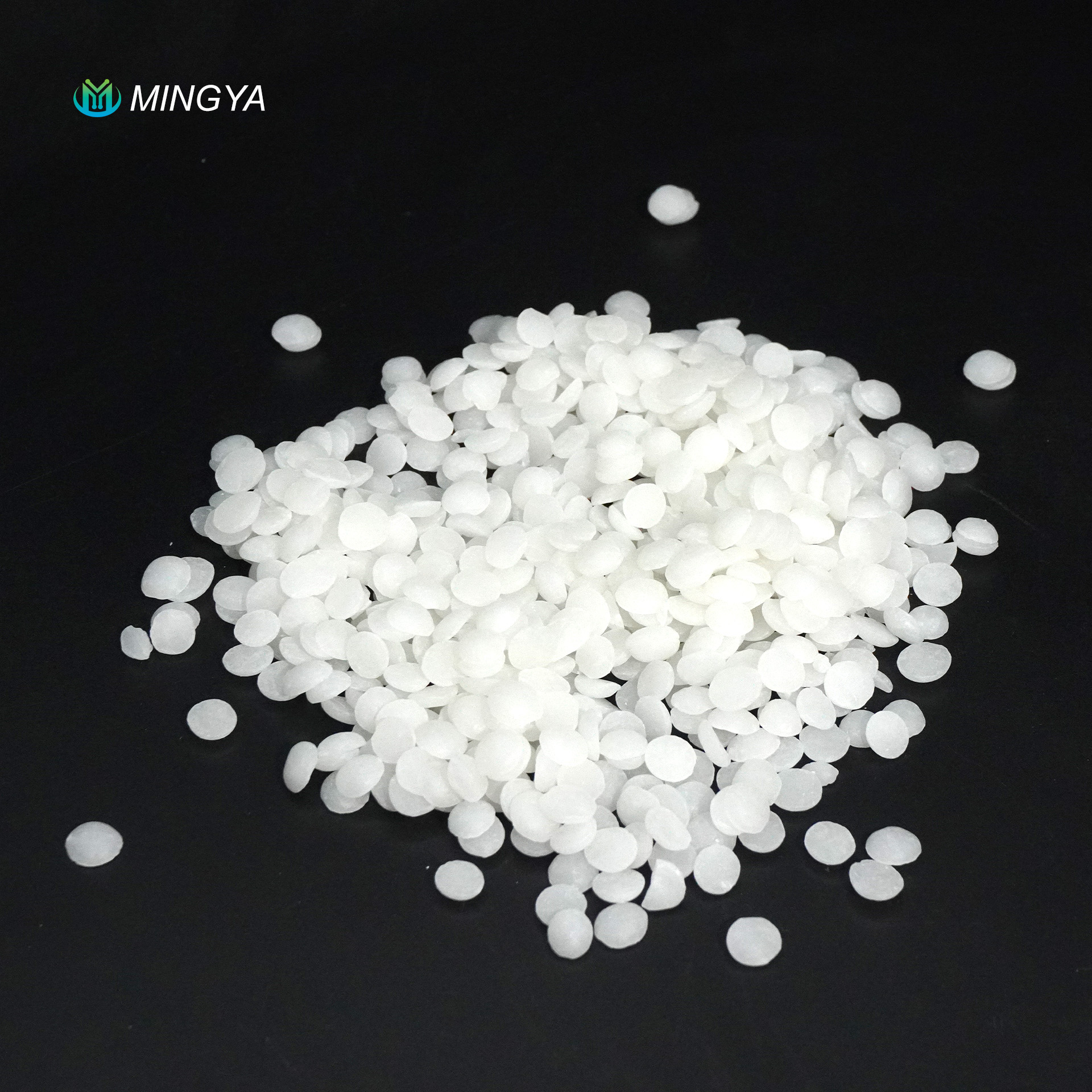
Today, from the perspective of a R&D staff, starting from the logic of industrial formulation, we will re-disassemble this problem, and combine our practical experience in the self-emulsifying system to explain why systems like OILREE® MY965 (PEG-100 Stearate and Glyceryl Stearate) can achieve a decrease in fatty alcohol dependence, and the structural mechanism behind it.
I.The true role of fatty alcohol in traditional emulsification system
In many traditional O/W systems, fatty alcohol (such as Cetyl Alcohol, Cetearyl Alcohol) is often mistaken for part of an
Emulsifier.But from the point of view of the chemical structure of the system, their real role is:
Crystal network structure construction material
Its role is mainly reflected in three aspects:
One is to form a crystal network so that the oil droplets are fixed at the physical level.
The second is to increase the viscosity of the system so that the system has a certain flow resistance.
The third is to improve the tactile structure so that the system exhibits a more stable texture during use.
However, it should be clear that these effects are not involved in the emulsification process itself, but in the structural reinforcement of the system after the emulsification.Therefore, the logic of traditional systems is usually to complete the emulsification first, and then rely on the fatty alcohol system to establish the final structure.This method is characterized by a clear structure, but high dependence on solid lipids.
II.Changes in structural emulsification system
The biggest change in the formula industry in recent years is not actually the upgrading of raw materials, but the change of structural logic.Traditional systems rely on fatty alcohol crystal networks, while new-generation systems are beginning to rely on molecular-level structures.For example, some typical modern emulsifying systems will use:
SODIUM ACRYLOYLDIMETHYL TAURATE COPOLYMER. The characteristic of this polymer system is that it does not provide viscosity through “solid crystals”, but through:
·Polymer chain entanglement
·Aqueous network structure
·Stable microgel state
To maintain the stability of the system.
There is a very critical change in this structure:
The viscosity of the system no longer depends on the solid material, but on the continuous phase structure.
This step change is very important because it directly weakens the necessity of fatty alcohol.
III. WHY can MY965 reduce fatty alcohol dependence?
In actual industrial applications, the reason why MY965 is often used to reduce the amount of fatty alcohol is not because it has a stronger emulsifying ability, but because it changes the stage of structure formation.In the traditional system, the structure is formed during the cooling process, that is, after the emulsification is completed, the “long crystal” is formed.The difference between the MY965 system is that the structure has already begun to form in the emulsification stage.
It provides stable interfacial adsorption through PEG-100 Stearate, while combining the lipid compatibility of Glyceryl Stearate, so that the interfacial membrane itself has a certain structural strength.
This will bring a result:
The system no longer completely relies on the late crystal network to make up the structure.
In many recipes, this means that fatty alcohol is no longer a must, but an option.
IV.The core advantages of a structured system
In the traditional system, the viscosity is basically controlled by fatty alcohol or wax structural agents, which brings a problem: the viscosity and skin feeling are bound.However, in modern systems, viscosity can be regulated by the interface structure.For example, in some lightweight emulsifying systems, it will combine:
Peg 7 glyceryl cocoate, the role of this component is to reduce the interfacial tension, while enhancing the compatibility of the oil-water phase, so that the system remains structurally intact under low solid content conditions.
This means:
·No need to rely on a high proportion of fatty alcohol
·Viscosity can be achieved through system design
·Skin feeling can be lighter and more flexible
This is also the core reason why modern recipes are becoming lighter and lighter.
V.Why does the traditional system still rely on fatty alcohol?
From an industrial point of view, fatty alcohol has not been eliminated, it still plays a key role in many systems, especially in high-oil phase systems.For example, some structural strengthening systems still rely on:
TRIBEHENIN
The role of such materials is to provide an additional network of solid lipids to enhance the ability to resist collapse.In other words: the advantage of the fatty alcohol system is not advanced, but stable.In industrial environments with large production fluctuations and obvious equipment differences, this kind of structural redundancy is still necessary.
VI.The nature of structural differences: Who determines the main stability mechanism of the system
If you simplify the two types of systems, the essential differences are very clear.:
Traditional system:
·The emulsifier is responsible for the interface
·Fatty alcohol is responsible for the structure
·Stability comes from solid network
Modern system:
·Emulsifiers participate in the interface and structure at the same time
·Auxiliary viscosity of polymer system
·Stability comes from molecular networks
Judging from R&D trends
In our formulation projects in recent years, a very obvious trend is that the role of fatty alcohol is changing.
It is no longer the skeleton of the system, but more like a regulator:
·Used to fine-tune the touch
·Used to enhance the local structure
·Used to improve the stability window
But it is no longer the only source of system stability.This means that the freedom of formula design is being re-released.
Conclusion: The core change of the emulsifying system is not whether there is fatty alcohol or not, but who will bear the structure.
Back to the original question:
Why do some emulsifiers have to rely on fatty alcohol, while some do not?
The essential answer is actually very simple:
·Traditional system: the structure comes from solid crystals
·Modern system: structure comes from interface and molecular network
· MY965 represents the second logic: structural pre-type emulsification system
When the structural source changes, the necessity of fatty alcohol naturally decreases.


 Hubei Mingya New Material Technology Co., Ltd.