Sorbitan laurate is a nonionic
Emulsifier prepared by the reaction of sorbitol and lauric acid.Most formulation engineers are familiar with its trade name Span 20, also known as sorbitan monolaurate.The INCI name is sorbitan laurate, CAS No. 1337-30-0, HLB value 8.6, is an oleophilic emulsifier, is a low HLB emulsifier, suitable for oil-in-water systems.
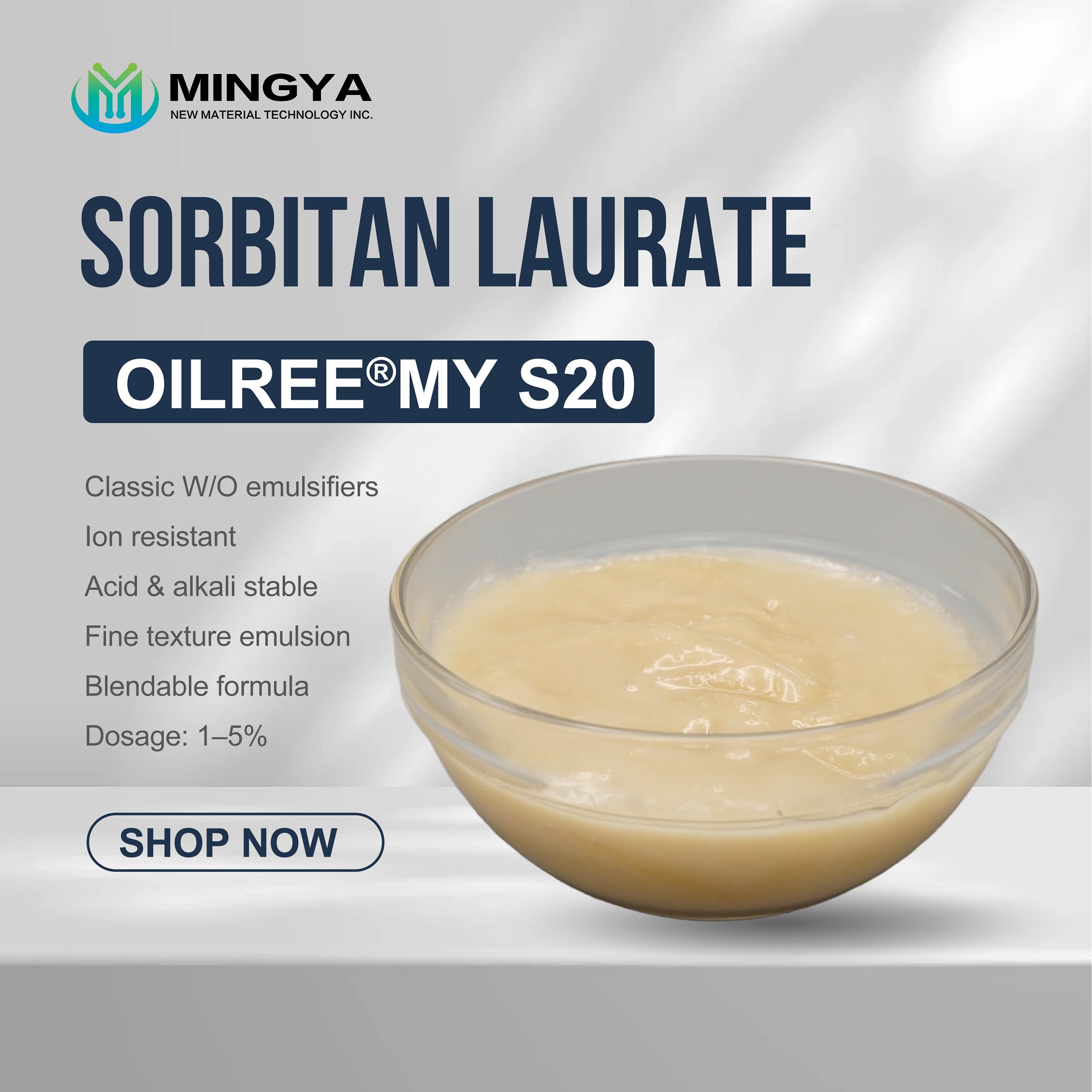
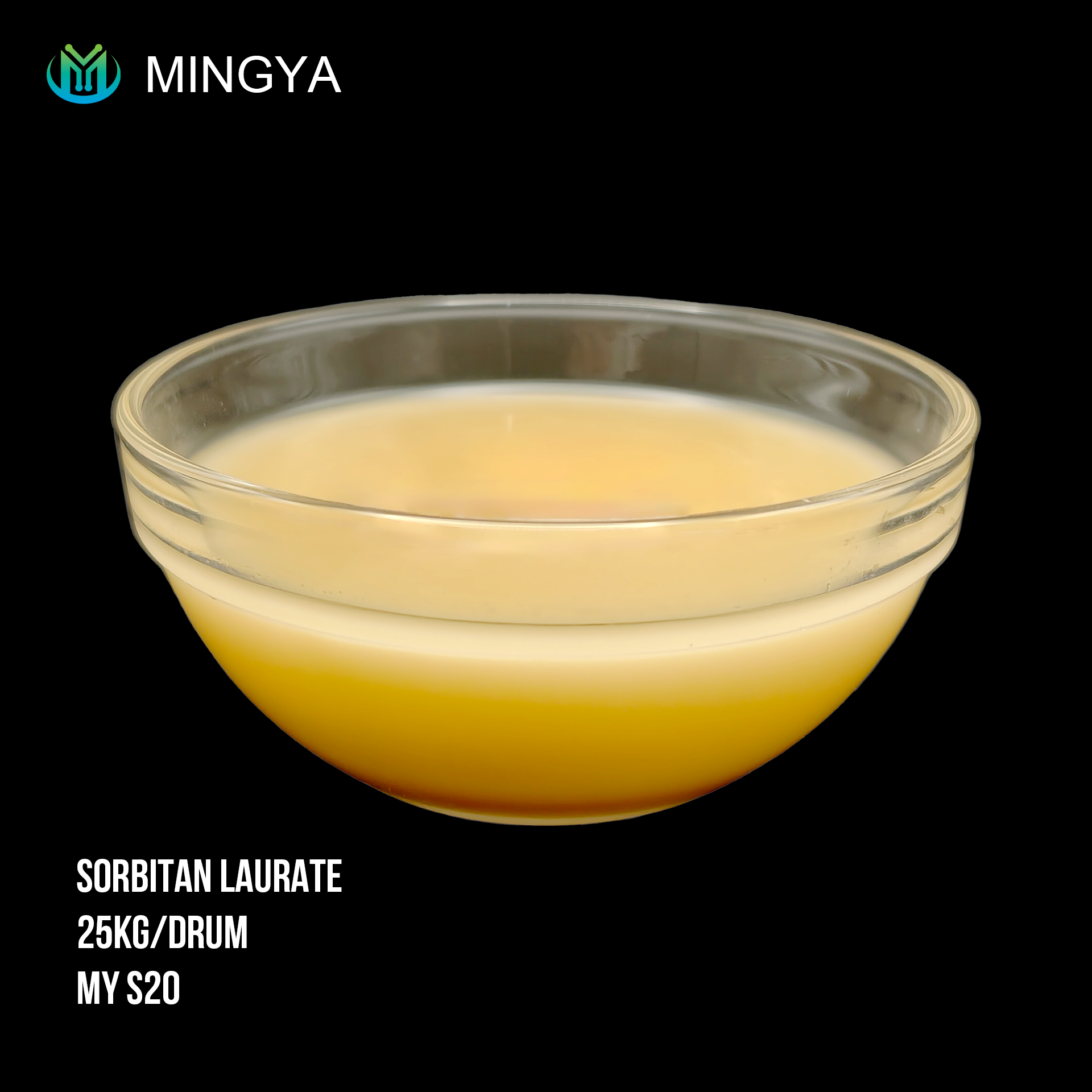
It is a yellow viscous liquid at room temperature, soluble in grease and most organic solvents, and insoluble in water; adding water will form an emulsion dispersion.The product is produced from sorbitol and lauric acid of plant origin, without the need for ethoxylation process, and can meet the requirements of natural sources.
Application features
Span 20 can achieve dual effects in the formula. With an HLB value of 8.6, it can be formulated separately as an oil-in-water emulsion or combined with tween as an emulsifier. A single emulsifier can take into account two use scenarios. Its own structure does not contain PEG, there is no ethoxylation process, and there is no 1,4‑dioxane-related detection risk. It can be applied to the list of clean beauty raw materials, but ethoxylated surfactants such as polysorbate 20 cannot meet the requirements of such lists.
It is mild in nature and can be used in resident products and sensitive skin formulas.The Cosmetic Raw Material Review Expert Group (CIR) has approved that it can be used in all cosmetic categories, with a acne-causing grade of 1.
The sorbitol and lauric acid in the raw materials are taken from coconut oil or palm kernel oil. There is no need to choose special ester raw materials to achieve the claim of natural origin.As a non-ionic surface active agent, it still has stable performance in high electrolyte systems and acidic systems, while anionic emulsifiers often fail under such conditions.
Used in sunscreen products, it can strengthen the film and improve the water resistance, while wetting the sunscreen to ensure the uniform spread of the sunscreen; used in makeup products, it can stabilize the suspension of pigments and avoid pigment settlement; applied to the skin, the skin feels fresh and non-greasy, and will not produce the sticky feeling caused by some heavy emulsifiers.
Application area
It can stabilize oil-in-water (O/W) emulsions, and can also be combined with high HLB surfactants such as polysorbate 20 (Tween 20) as an emulsifier.The formula system can reduce the interfacial tension and maintain the non-stratification of the two phases of oil and water; at the same time, it moisturizes and disperses pigments and sunscreens to give the skin a smooth and non-sticky feeling.
Applicable scenarios
- Oil-in-water ointment cream and emulsion: maintain the stability of the emulsion system
- Sunscreen products: improve water resistance and help sunscreen spread evenly
- Liquid foundation and other makeup: prevent pigment from settling
- Cleansing cream, makeup remover oil: gently dissolve and remove oil-soluble dirt
- Conditioner: softens hair and improves tangles
Recipe addition suggestions
Add to the oil phase, the recommended dosage is 1-5%;
It can be melted in the oil phase at about 50-55℃, and needs to be fed in the heating process stage.
When compounding with polysorbate 20 to prepare a stable oil-in-water cream, the ratio of Span to tween is recommended to be 1:1~4:1.
It has good compatibility with most preservatives, active substances and other surfactants, such as niacinamide and retinol.







 Contact Now


